
Information presented by "Lingaraj Services"
The name Lingaraj literally means “The King of Lingas”, signifying Lord Shiva as the supreme divine force worshipped here in the form of a sacred Shivling. The temple showcases a subtle influence of the traditional Kalinga architectural style, visible in its majestic stone construction. Built using dark-hued stone, the structure stands prominently across a vast expanse in Bhubaneswar, reaching an impressive height of approximately 55 meters. Within the temple complex, numerous smaller shrines are dedicated to the worship of various deities, creating a spiritually vibrant atmosphere. The temple walls are adorned with intricately carved sculptures and inscriptions, reflecting exceptional craftsmanship and artistic excellence. All the shrines within the premises are robustly constructed and well preserved. The main entrance, known as the Lion Gate, is a striking architectural feature. It is flanked by sculpted lions on both sides, with dramatic depictions of lions overpowering elephants, symbolizing strength and dominance. Interestingly, due to an optical illusion created by its design, the temple appears far larger than its actual dimensions, adding to its grandeur and visual impact. The temple complex is designed on a strict east–west axial alignment and consists of four distinct structures, each serving a sacred purpose:
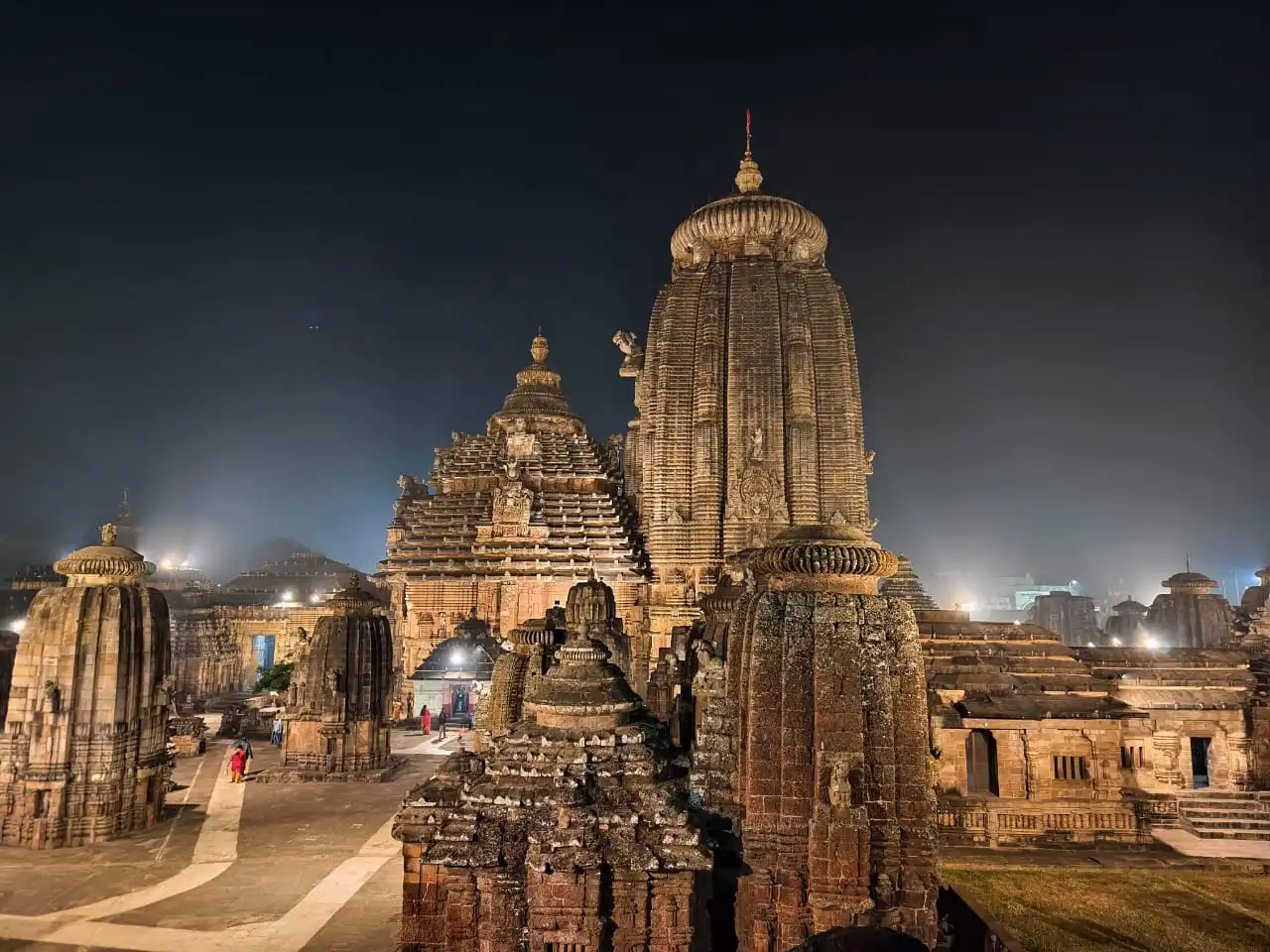
The Deula is the sanctum sanctorum where the holy Shivling resides. This sacred chamber forms the spiritual core of the temple, where Lord Shiva is worshipped in his most revered form.
The Jagamohana serves as the assembly hall, where devotees gather to offer prayers and witness rituals conducted within the temple.
The Natamandapa is the dance hall, traditionally used for ritualistic dance performances that were once an integral part of temple worship and cultural expression.
The Bhogamandapa is the offering hall, where sacred food (bhog) is prepared and offered to the deity before being distributed as prasad to devotees.
Book Panditji for various Abhishek Puja at Lingaraj Temple, where our experienced and verified Panditji perform sacred pujas and rituals as per authentic Vedic traditions. Below is the list of dedicated Panditji who perform various pujas at Lingaraj Temple. Once your booking is confirmed, the assigned Panditji will personally guide you regarding the puja process, other important details to ensure a smooth and spiritually experience.
The worship traditions of Lingaraj Temple have been preserved for centuries through a disciplined system of authorized priesthood. Devotees can now book panditji for puja online for Lingaraj Temple via Lingarajtemple.org with an authorized Panditji for performing sacred abhishek pujas such as dudhabhishk puja, jalabhishek puja in Bhubaneswar, Odisha. All pujas are conducted only by temple-authorized pandits, strictly following traditional Vedic and rituals.
Lingaraj Temple Darshan Time : Open throughout the week: 5 AM to 9 PM
Lingaraj Temple Abhishek Puja Timing : 6 am to 2 pm.
Abhishek Puja Timings may vary as per the festivals.
The Lingaraj Temple was constructed in the 11th century CE under the patronage of the Somavanshi King Jajati Kesari. It reflects the height of temple architecture in ancient Kalinga and showcases the deep spiritual and cultural roots of Odisha. Over the centuries, the temple has remained a living center of Shaivite worship, preserving rituals, traditions, and beliefs passed down through generations. The Lingaraj Temple stands as one of the most magnificent and sacred landmarks of India, representing the spiritual heart of Bhubaneswar, Odisha. Dedicated to Lord Shiva, the temple symbolizes devotion, architectural brilliance, and centuries-old religious traditions that continue to inspire millions of devotees.
The authorized pandits of Lingaraj Temple play a vital role in preserving ancient Shaivite traditions that have continued uninterrupted since the 11th century. Their service ensures that every ritual is performed with devotion, discipline, and spiritual purity.
The Dakshina (honorarium) for each puja is clearly mentioned at the time of booking, ensuring complete transparency for devotees. Online Pandit booking is available only through Lingarajtemple.org
At the holy Lingaraj Temple, Bhubaneswar, Abhishek rituals form the core of Lord Shiva worship. These sacred offerings are performed with deep devotion to invoke divine blessings, spiritual purification, and inner peace. Each Abhishek holds unique spiritual significance and is performed according to ancient Shaivite traditions.
Jal Abhishek puja is the most fundamental form of Shiva worship, where the sacred Shivling is bathed with pure water. This ritual symbolizes the cooling of divine energy and the cleansing of body, mind, and soul.
Devotees perform Jalabhishek to seek:
In Dudh Abhishek Puja, the Shivling is offered pure cow’s milk, symbolizing purity, nourishment, and devotion. This ritual is believed to calm the cosmic energies of Lord Shiva and bestow prosperity upon devotees.
Dudh Abhishek is commonly performed for:
Panchamrit Abhishek Puja involves bathing the Shivling with a sacred mixture of milk, curd, honey, ghee, and sugar. These five ingredients represent the five elements of life and spiritual balance.
This Abhishek is performed to:
Lingaraj Temple Rudra Abhishek Puja is a highly revered Vedic ritual dedicated to Lord Shiva, performed with the chanting of Rudra Mantras and Namakam–Chamakam from the Yajurveda. Sacred substances such as water, milk, and Panchamrit are offered during the ritual.
Rudrabhishek is believed to:
Laghurudra Abhishek Puja is an advanced and powerful form of Shiva worship involving the chanting of Rudra Mantras multiple times with elaborate Abhisheks. It is performed with strict Vedic procedures under the guidance of experienced priests.
This ritual is conducted for:
The Garbhagriha (sanctum sanctorum), the sacred Shiva Lingam is believed to have manifested naturally, earning it the revered title of Swayambhu. Owing to this divine origin, devotees worship the Lingam as a unified form of Lord Shiva and Lord Vishnu. At the temple entrance, a prominent trident (Trishul) can be seen, featuring an idol of Lord Shiva at the center, flanked by two idols of Lord Vishnu on either side. The temple stands as a powerful symbol of harmony between two major spiritual traditions and is therefore honored as Hari-Hara. In this sacred concept, Hari represents Lord Vishnu and Hara signifies Lord Shiva, together embodying divine unity. The Lingam, cra, is ritually worshipped every day with offerings of milk, water, and bhanga, following age-old customs.
The Nata Temple within the complex preserves traces of the ancient Devadasi tradition, highlighting the temple’s cultural and historical depth. Additionally, the Parsva Devatas—Lord Kartikeya, Lord Ganesha, and Goddess Parvati—are installed in different directional niches around the shrine. Each deity is exquisitely adorned with graceful drapery and ornate decorations. Reflecting the rich spiritual heritage of India, the temple attracts countless devotees from across the globe. Visitors come here to experience the serene aura and divine energy that envelops the sacred space, leaving them with a profound sense of spiritual fulfillment.
By Air: The nearest airport is Biju Patnaik International Airport (BBI), which mainly serves domestic flights. The airport is located approximately 3.5–4 kilometers from the Lingaraj Temple. The journey usually takes 15 to 20 minutes by taxi or private vehicle, depending on traffic conditions, making air travel a convenient option for visitors.
By Rail: Bhubaneswar Railway Station is another easily accessible point of arrival. The temple is situated around 3–4 kilometers from the station and can be reached within 10 to 20 minutes by auto-rickshaw or taxi. Due to its close proximity, the temple is considered one of the city’s most conveniently located landmarks.
By Bus: Bhubaneswar’s primary bus terminal is the Babasaheb Bhimrao Ambedkar Bus Terminal (BSABT), widely known as the Baramunda Bus Stand or Baramunda ISBT. Located in the Baramunda area, this terminal serves as the main hub for both inter-city and interstate bus services, connecting Bhubaneswar with major cities and neighboring states. From the bus stand, travelers can easily reach Lingaraj Temple by local transport such as taxis or auto-rickshaws.
The best time to visit Lingaraj Temple is during the winter season, from October to March, when the weather in Bhubaneswar remains pleasant and comfortable for darshan and puja. This period is ideal for exploring the temple peacefully and attending special rituals. Devotees especially prefer visiting during Mahashivratri, when the temple is beautifully decorated and grand celebrations take place. Early morning or evening hours are considered the best for a peaceful darshan and spiritual experience.
To known more about why is Lingaraj Temple famous?,Lingaraj Temple festivals click on FAQ.
© 2025 Lingaraj Services. All rights reserved. Privacy Policy& Terms & ConditionsDesigned & Developed by Lingaraj Services .